No Filter, No Problem: How Asian Creators Cracked the Code on Global Virality Without Selling Out
There used to be an unspoken rule in entertainment: if you wanted Western audiences to pay attention, you had to translate yourself for them. Soften the edges. Swap out the unfamiliar. Make it digestible. For decades, that was just the cost of crossing over.
Then TikTok happened. And suddenly, that rule is looking real outdated.
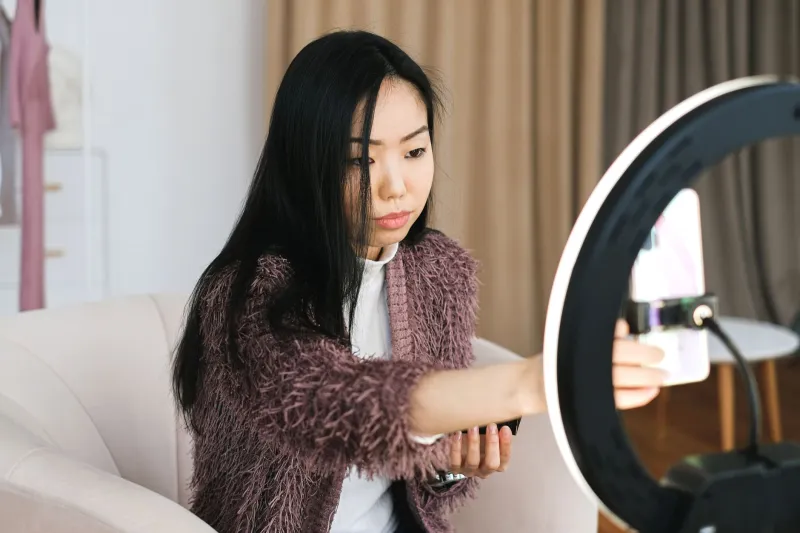
A new wave of Asian creators — from Seoul apartments, Manila bedrooms, Tokyo convenience stores, and yes, even Koreatown living rooms — is racking up millions of followers without running a single thing through the Western media filter. No Hollywood agent. No network note telling them to explain the joke. Just a phone, a vibe, and an algorithm that apparently does not care where you're from.
The question worth asking: how exactly did authenticity become the cheat code?
The Old Gatekeeping Game Is Over
For most of the 20th century, Asian artists and entertainers who wanted global reach had a narrow path. You either got picked up by a Western label or studio that reshaped you for American tastes, or you stayed local and hoped for a miracle. The crossover stories we celebrated — think early Jackie Chan films getting dubbed and re-edited for US release, or J-pop acts getting English-language makeovers — almost always involved someone else deciding what parts of you were worth keeping.
Short-form video platforms blew that model up. TikTok's For You Page doesn't care about your PR team. It cares about watch time, shares, and saves. And it turns out that genuinely specific, culturally rich content stops thumbs way more effectively than generic, palatable-for-everyone content ever did.
Specificity is the new universality. That's the plot twist nobody saw coming.
Case Study: The 'Everyday Life' Effect
Take creators who build entire audiences around mundane, hyper-local content — a Japanese convenience store worker showing the art of onigiri assembly, a Korean mom narrating her banchan prep in a mix of Korean and English, a Taiwanese street food vendor whose silent cooking videos rack up millions of views with zero translation needed.
None of this content was designed for a Western audience. That's exactly why Western audiences can't stop watching it.
There's a psychological pull to content that makes you feel like you're peeking into a world you weren't invited to. It's the same reason travel vlogs blow up, or why 'day in my life' content from someone in Osaka hits different than the same format from suburban Ohio. The unfamiliarity is the feature, not the bug.
Creators who figured this out early stopped trying to explain their culture and started just living in it on camera. The audience followed.
When the Algorithm Rewards Realness
Here's where it gets interesting from a pure numbers standpoint. Platform algorithms — TikTok's especially — are designed to surface content that generates strong emotional responses fast. Curiosity is one of the most powerful of those responses. Content that makes someone think wait, what is that? or I need to know more tends to get pushed hard.
Culturally specific content from Asian creators is basically an emotional response machine. A video of a Korean street vendor making hotteok triggers curiosity in someone who's never heard of it, nostalgia in a Korean American who grew up eating it, and ASMR-level satisfaction in anyone who's just into satisfying food content. One piece of content, three different emotional hooks, massive algorithmic reward.
Compare that to content that's been flattened to appeal to everyone — it often ends up appealing strongly to no one. The algorithm punishes blandness. It rewards the specific.
The Language 'Barrier' That Wasn't
One of the biggest assumptions Western media gatekeepers held onto forever was that non-English content had a ceiling. Audiences wouldn't watch subtitles. They wouldn't engage with something they couldn't fully understand.
The data says otherwise. Subtitled content from Asian creators regularly outperforms English-language content in the same niches. Creators who post primarily in Korean, Japanese, Tagalog, or Mandarin — sometimes with captions, sometimes without — have built fanbases in the US that are deeply engaged, not casual.
Part of this is generational. Younger American audiences grew up watching subbed anime, playing JRPGs, stanning K-pop groups, and navigating content from around the world as a totally normal part of their media diet. The subtitle 'barrier' was always more of a generational comfort zone than an actual obstacle.
When Gen Z says they don't see language as a barrier, they mean it. And they are currently everyone's most coveted audience demographic.
Staying Rooted While Going Global
What separates the creators who've genuinely cracked global virality from those chasing it is a kind of groundedness that reads immediately on camera. There's a difference between a creator who shares their culture because it's just their life, and one who's performing their culture because they think it'll travel well.
Audiences — especially online audiences who've developed finely tuned authenticity detectors — feel that difference instantly.
The creators winning right now aren't thinking about global appeal. They're thinking about what's true to them, what's interesting to them, what's funny or beautiful or meaningful in their specific world. The global audience finds them because of that, not in spite of it.
It's a counterintuitive lesson that the entertainment industry is still slowly absorbing: the more you try to appeal to everyone, the less interesting you become to anyone.
What This Means for the Bigger Picture
The ripple effects of this shift go beyond individual creator success stories. When Asian creators build massive global audiences on their own terms, it changes the negotiating position of Asian voices in entertainment broadly. It proves the market exists without anyone having to beg a network executive to believe in it.
Brands have noticed. Studios have noticed. The same gatekeepers who once held the keys to Western exposure are now sliding into DMs, trying to attach themselves to audiences they didn't help build.
That's a different kind of power. And it didn't come from playing by the old rules.
The TikTok era didn't just give Asian creators a platform. It gave them proof — receipts, in the form of view counts and follower numbers — that the world was always ready for them. The gatekeepers were the bottleneck, not the audience.
Now that the gate's wide open, it'll be interesting to see who keeps walking through it without looking back.