Scroll Down to Feel Something: How Webtoons Broke American Readers' Brains in the Best Way
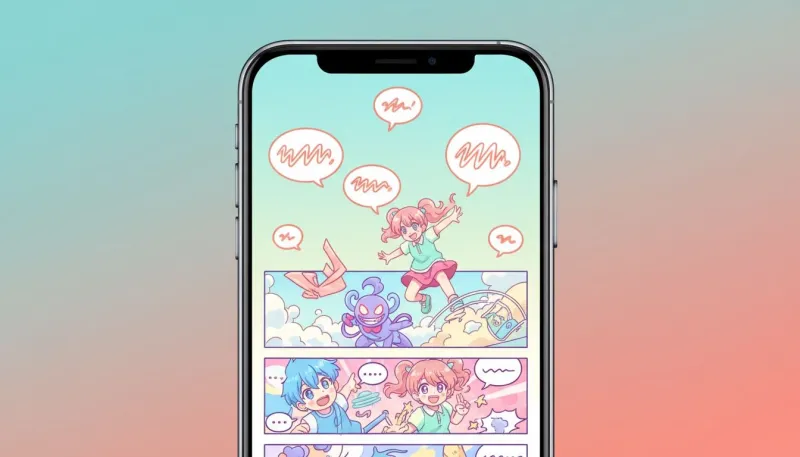
Photo: person reading webtoon smartphone colorful comic digital, via applestan.com
Somewhere around 2018, a quiet but seismic shift happened in how a significant chunk of Americans started reading stories. It didn't make headlines. It didn't have a cultural moment attached to it. It just... happened, one vertical scroll at a time. Korean webtoons — episodic, mobile-first, visually inventive digital comics — had been building an audience in the US for years, but something clicked in the late 2010s that turned a niche interest into a genuine publishing phenomenon.
And now, whether they realize it or not, American readers have been permanently changed by it.
What Webtoons Actually Are (And Why Format Matters More Than You Think)
If you haven't encountered them, here's the quick version: webtoons are digital comics designed specifically for vertical scrolling on a smartphone screen. No page turns, no panel grids, no left-to-right reading direction. Instead, panels flow downward in a continuous strip, often using the scroll itself as a dramatic device — a slow reveal, a sudden drop into white space, a color shift that signals a mood change. The format originated in South Korea in the early 2000s, pioneered by platforms like Naver Webtoon, and has since become a global industry worth billions.
But here's why format matters so much: the webtoon structure isn't just a delivery mechanism. It's a storytelling grammar. And once you've internalized that grammar, it changes how you experience every other narrative format you consume.
The Pacing Revolution Nobody Named
Traditional American comics — and to a large extent, traditional novels and TV — operate on a pacing logic built around chapters, issues, and episodes. There are natural pause points, cliffhangers engineered for weekly or monthly release schedules, and a certain tolerance for slow burn built into the reader's expectations.
Webtoons blew that up. Because episodes release multiple times per week on major platforms, and because the scroll format creates a sense of continuous motion rather than discrete pages, readers acclimate to a much faster narrative metabolism. Plot developments that would take three issues of a traditional comic happen in a single webtoon episode. Emotional payoffs arrive earlier and more frequently. The story is constantly moving.
American readers who've spent significant time on webtoon platforms report — consistently, across fan forums and reader surveys — that going back to traditional comics or even some novels feels slow in a way it didn't before. That's not a criticism of those formats. It's evidence of how completely the webtoon reading experience recalibrates your narrative expectations.
Visual Storytelling That Plays by Different Rules
The vertical format also pushed Korean webtoon artists to develop visual techniques that have no real equivalent in Western comics tradition. Color is used dynamically and psychologically — backgrounds shift in hue to reflect emotional states rather than just setting. White space becomes a narrative tool, not just a layout consideration. Sound effects are integrated into the art itself in ways that feel almost musical.
And because webtoons are designed for phone screens rather than print, the art style tends toward high contrast, bold outlines, and expressive faces that read clearly at small sizes. This has influenced an entire generation of American digital artists who grew up reading webtoons — you can see it in the illustration styles proliferating on Instagram and in self-published graphic novels, even when the creators have no explicit connection to Korean comics.
Publishing Houses Are Paying Attention (Slowly)
The traditional American publishing industry has been watching the webtoon boom with a combination of fascination and anxiety. On one hand, platforms like Webtoon (the English-language arm of Naver's global operation) and Tapas have demonstrated that there is a massive, largely young, predominantly female readership hungry for exactly the kind of emotionally intense, frequently updated serialized content that traditional publishers have historically underserved.
On the other hand, the webtoon model — free to read, with optional "fast pass" purchases for early episode access — is a monetization structure that doesn't map neatly onto anything in the traditional publishing playbook.
The response from major publishers has been tentative but real. Random House Graphic, Scholastic Graphix, and others have quietly begun acquiring webtoon IP for print adaptation. Some of these adaptations have performed remarkably well — Lore Olympus by Rachel Smythe, originally a Webtoon series, became a New York Times bestseller in print form. The pipeline between webtoon popularity and traditional publishing deal is becoming a recognized career path for creators.
Streaming Platforms Are Catching Up
The webtoon-to-screen adaptation wave is already well underway in Korea — Sweet Home, Itaewon Class, All of Us Are Dead, and Extraordinary Attorney Woo all began as webtoons before becoming Netflix hits. American streaming platforms are now actively mining webtoon catalogs for IP, recognizing that a webtoon with millions of readers is essentially a pre-tested story with a built-in global audience.
But there's something more interesting happening beneath the surface adaptation deals. The narrative DNA of webtoons — the rapid pacing, the frequent emotional peaks, the episodic structure that rewards binge consumption — is starting to influence how American streaming shows are written, even when they have no webtoon connection. The influence is becoming structural rather than just source-material-based.
Social Media and the Webtoon Brain
Perhaps the least-discussed ripple effect is how webtoon reading habits have shaped the way Americans engage with visual storytelling on social media. The vertical scroll, the panel-by-panel reveal, the use of white space and color for emotional effect — these are all techniques that have migrated from webtoon culture into Instagram carousels, TikTok slideshows, and even some forms of Twitter/X visual storytelling.
Creators who grew up reading webtoons are now building their social media content with an unconscious fluency in webtoon visual grammar. Their audiences, many of whom are also webtoon readers, receive that grammar intuitively. A whole visual communication dialect has developed that traces directly back to a Korean digital comics format from the early 2000s.
One Format, Permanent Footprint
The webtoon revolution didn't arrive with a press release. It didn't get a Super Bowl ad or a trend piece in the Times when it was happening. It came in through the phone, one scroll at a time, and it rewired something fundamental about how a generation of Americans expects stories to move, breathe, and feel.
That's the kind of cultural shift that's easy to miss while it's occurring and impossible to ignore once you start looking for its fingerprints. They're everywhere.