From the Feed to Your Feelings: The Asian Internet Trends That Quietly Became America's Wellness Obsessions
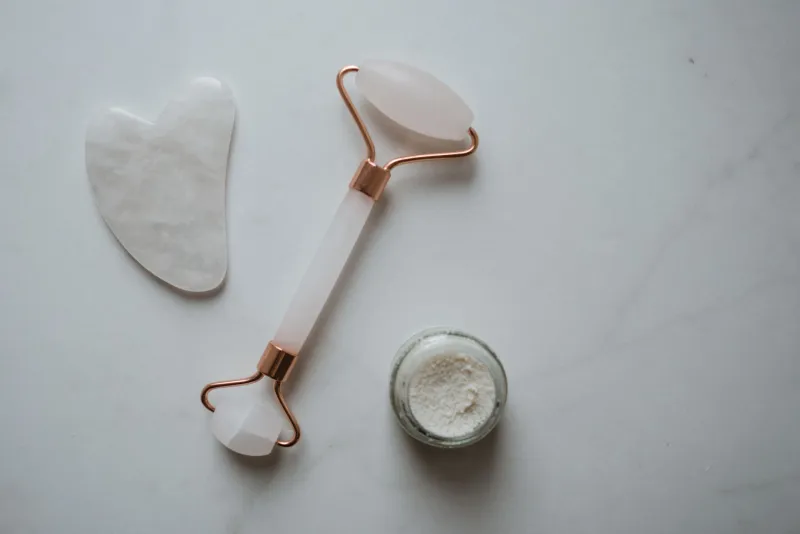
At some point in the last decade, American wellness culture stopped being about green juice and SoulCycle and started being about something harder to define — a collection of practices and philosophies and rituals that feel simultaneously ancient and extremely online. If you've lit a candle while watching someone eat quietly on YouTube, or used a gua sha tool while mentally categorizing your possessions by whether they spark joy, you've been living inside a cultural shift that started in Asian creator spaces and traveled west without most people tracking the journey.
Here's where it actually came from.
Mukbang: Eating as Performance, Community, and Somehow Therapy
Mukbang — from the Korean words for "eating" (먹다) and "broadcast" (방송) — started on South Korean streaming platform AfreecaTV around 2010. The premise was simple to the point of being almost conceptually offensive: a person sits in front of a camera and eats a large amount of food while talking to their audience.
And yet.
By the mid-2010s, mukbang had migrated to YouTube and built an enormous global following. American creators adopted the format. ASMR eating content — a mukbang adjacent genre focused on the sounds of eating rather than the social aspect — became its own massive category. Food content on TikTok today is essentially mukbang's direct descendant, even when the creators have never heard the word.
What the format tapped into was a specific modern loneliness — the desire to share a meal with someone, even virtually, even with a stranger. In Korea, where solo dining can carry social stigma, mukbang offered companionship without vulnerability. In America, where people increasingly eat alone in front of screens, it offered the same thing. The packaging was Korean. The need was universal.
ASMR: The Accidental Meditation from Asian Content Spaces
ASMR as a named phenomenon originated in Western online communities around 2010, but the specific aesthetics and formats that made it a mainstream wellness tool were heavily shaped by Asian creators — particularly Korean and Japanese YouTubers who brought minimalist visual presentation, specific object-focused content, and a meditative pacing that distinguished their work from early Western attempts.
Japanese ASMR in particular developed a distinct sub-genre around everyday sounds — the specific crinkle of plastic packaging, the click of a mechanical pencil, the ambient noise of a quiet café — that drew directly from Japanese aesthetic concepts like ma (the appreciation of negative space and silence) and mono no aware (a gentle awareness of impermanence).
American wellness culture absorbed ASMR wholesale, eventually producing a multi-million dollar industry of dedicated microphones, scripted "triggers," and sleep content. The philosophical underpinnings — the idea that slowing down to notice small sensory details is itself a form of restoration — came with it, even if those underpinnings rarely got credited.
The Skincare Ritual: From K-Beauty Routine to Emotional Regulation Practice
Korean skincare — its multi-step structure, its emphasis on long-term skin health over quick fixes, its almost ceremonial approach to layering products — entered American consciousness around 2015 and promptly dismantled everything American women thought they knew about a "beauty routine."
But what's interesting is how quickly the cultural conversation shifted from the products themselves to the ritual. American adopters of K-beauty routines began reporting that the practice — the deliberate, unhurried attention to each step, the tactile engagement, the nightly consistency — had become a form of mindfulness. A way of transitioning out of the day. A small, controllable act of care in an uncontrollable world.
This wasn't incidental. Korean beauty culture has always framed skincare as self-respect rather than vanity — a daily investment in your future self rather than a cosmetic fix for your current one. That framing traveled with the products and ended up reshaping how American wellness culture talks about self-care more broadly.
Ikigai, Wabi-Sabi, and the Aesthetic Philosophy Pipeline
Japanese philosophical concepts have been flowing into American self-help culture for years, but the pace accelerated dramatically in the 2010s. Ikigai — the idea of finding one's reason for being through the intersection of passion, skill, need, and livelihood — became a staple of LinkedIn posts and career coaching content. Wabi-sabi — an appreciation for imperfection and impermanence — influenced interior design, creative practice frameworks, and a broad cultural pushback against perfectionism.
Forest bathing (shinrin-yoku), the Japanese practice of spending deliberate time in nature for stress reduction, entered American wellness spaces and spawned a cottage industry of guided experiences, scientific studies, and app-based programs.
None of these concepts were invented for export. They emerged from specific cultural and philosophical traditions and were shared online by Japanese creators and writers who were simply discussing their own lives. American audiences found them, adopted them, and occasionally — in the more thoughtful corners of wellness media — gave credit where it was due.
The 'Slow Living' Aesthetic and Its Chinese Internet Roots
If you've spent any time on YouTube's more serene corners, you've likely encountered Li Ziqi — the Chinese creator whose videos of rural life, traditional cooking, and handmade craft became a global phenomenon starting around 2017. Her content, which shows almost no dialogue and emphasizes the meditative quality of slow, skilled work, helped seed an entire aesthetic movement that American creators have since replicated endlessly under the "slow living" or "cottage core" umbrella.
The irony is that "slow living" became a trend on platforms optimized for maximum engagement — content about doing things unhurriedly, consumed at scroll speed. But the underlying hunger it addressed was real: a desire for pace, for craft, for the sense that time spent carefully on small things has value.
Giving Credit Where It's Due
The through-line in all of these trends is the same: a need that already existed in American culture, met by a practice or framework or aesthetic that came from somewhere specific — from Korean internet communities, Japanese philosophy, Chinese rural traditions — and then absorbed into the broader wellness market with varying degrees of attribution.
That absorption isn't inherently bad. Cultural exchange is how the world works. But there's a version of it that flattens everything into generic "self-care" content with no origin story, and a version that actually engages with where these ideas came from — which tends to make them richer, more effective, and more interesting.
The wellness trends that started in Asian online spaces became global because they worked. Understanding why they worked means understanding where they came from.