The Arena Is the Ritual: Five Asian Concert Traditions American Fans Are Stealing (Respectfully)
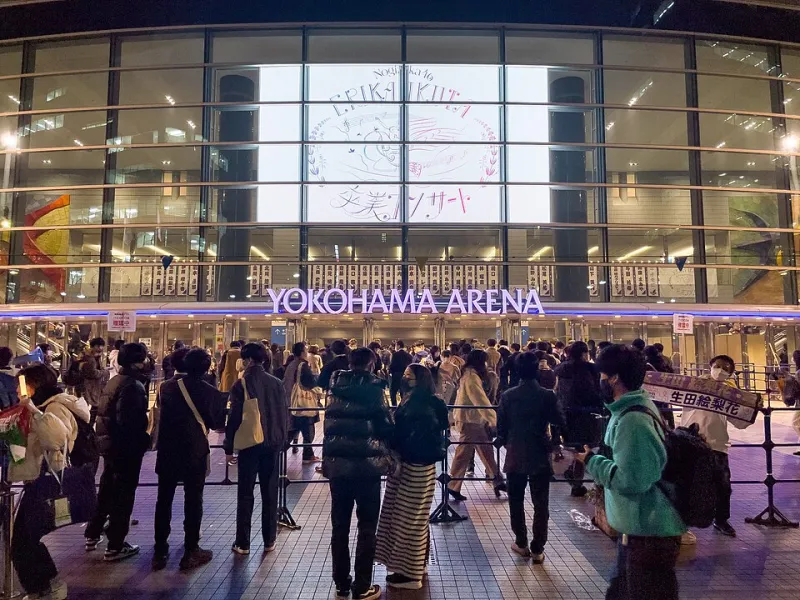
Photo: Dick Thomas Johnson from Tokyo, Japan, CC BY 2.0, via Wikimedia Commons
American concerts have their own rituals. The opening act nobody watches. The phone flashlight ballad. The encore where everyone pretends they are surprised the band came back. They are fine. They are familiar. But if you have spent any time in Asian concert culture—especially K-pop and J-pop fandom—you know that a show can feel less like a performance and more like a room full of people who all agreed to participate.
That is not an accident. Asian concert traditions are often built around fan participation, coordination, and a kind of shared homework. Fans learn the chants. Fans coordinate the lightsticks. Fans plan the birthday ads. The artist performs, but the audience is also performing. In 2026, American fans are borrowing those rituals, and venues are realizing they were not built for this level of organized enthusiasm.
Why Concert Culture Hits Different When Everyone Knows the Assignment
A concert is usually a one-way transaction: artist sings, audience cheers. Asian fan culture often turns it into a two-way contract. The audience has a role. They know when to shout, when to go quiet, when to hold up a sign, and when to make the whole arena look like a synchronized light show. That shared knowledge creates a feeling that is hard to fake. It is not just loud. It is coordinated.
That coordination is also why American fans are drawn to it. It gives them something to do besides film the entire show on a phone. It turns strangers in the same section into a temporary team. And it makes the artist feel the room in a way that a simple cheer cannot match.
1. The Synchronized Fan Chant
The fan chant is the gateway ritual. In K-pop especially, fans learn specific chants for specific songs—names, phrases, call-and-response moments—and deliver them on cue. When it works, the arena sounds like a second vocal track. When it fails, it sounds like a sports bar trying to sing a hymn. The difference is preparation.
American fans are picking it up. You can hear it at K-pop shows in Los Angeles, New York, and Dallas, where sections of the crowd have clearly done their homework. The chant changes the energy of a song. It tells the artist that the audience is not just watching. They are in it. Venues are still adjusting. Some security teams do not know what to do with a crowd that suddenly starts shouting in unison. The answer, usually, is nothing. Let it happen.
2. Lightstick Choreography
A lightstick is not just a glow stick with a logo. It is a piece of concert technology, a collectible, and a coordination tool. Fans sync colors, wave patterns, and movements. Some shows have entire sections where the lightsticks become part of the staging. The audience is basically a lighting rig with a heartbeat.
American arenas are not always ready for this. Lightstick policies vary from venue to venue. Some places treat them like contraband. Others wave them through and then wonder why the crowd looks like a sea of synchronized fireflies. The best venues are learning to relax. A coordinated light display is not a safety hazard. It is a fan culture flex.
3. Birthday Ad Projects
Birthday ad projects are the most ambitious ritual on this list. Fans pool money to buy ads—subway posters, billboards, digital screens—to celebrate an artist's birthday. It sounds excessive until you realize it is basically a group art project with a budget. The ads are not just presents. They are proof of organization. They are a way for fans to say: we see you, and we can coordinate.
In the US, those projects are showing up in places like Times Square and major transit hubs. They are still niche, but they are growing. The appeal is obvious. A birthday ad is visible, shareable, and a little bit ridiculous in the best way. It also puts pressure on venues and cities to figure out how fan-funded displays fit into public space. The answer is usually: carefully, and with a lot of permits.
4. Color-Coded Dress Codes
Asian concert fans love a dress code. Sometimes it is a specific color. Sometimes it is an entire outfit theme. Sometimes it is a subtle nod that only other fans will recognize. The result is an arena that looks curated. You can spot the fandom from across the street. You can feel the unity before the first song starts.
American fans are adopting this too, especially around K-pop acts. The dress code turns the line outside into a runway and the seating chart into a color palette. It also makes the concert feel like an event rather than a night out. Venues are scrambling to keep up with the photo ops, the outfit changes, and the sheer amount of glitter in the parking lot.
5. The Coordinated Encore Project
The encore project is the final boss of fan coordination. Fans plan banners, signs, or a specific song to sing when the artist returns. The goal is to surprise the performer and create a moment that is not on the setlist. When it works, it is genuinely moving. When it does not, it is a confused singalong. Either way, it is a ritual.
American fans are getting better at this. You can see it in the handmade banners, the fan-organized photo projects, and the way a crowd can suddenly organize itself into a chorus. Venues are not always prepared for fans who treat the encore like a group assignment. But the best ones are learning. They are giving fans clearer rules, more space, and fewer reasons to get in the way of a good moment.
The bigger lesson is simple. Concert culture is not just about what happens onstage. It is about what the audience decides to do together. American arenas are not empty of ritual. They are just learning a few new ones. And honestly? The room feels bigger when everyone knows the assignment.