One Chip Bag at a Time: How Asian Convenience Stores Became America's Favorite Travel Show
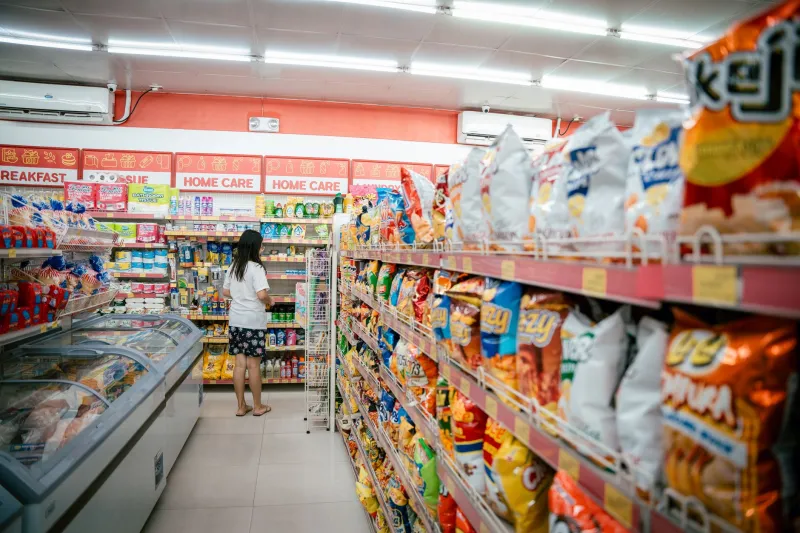
There's a specific genre of video that has quietly taken over millions of American feeds: a creator walks into a convenience store, grabs a triangular rice ball, a bottle of something neon and unpronounceable, maybe a fried chicken stick sealed in plastic — and the internet goes feral.
No plot. No stakes. Just a snack aisle, a camera, and pure vibes. And somehow, it's the most relaxing thing on your timeline.
The Stranger in the Snack Aisle
Call it what you want — konbini tours, corner store taste tests, Asian grocery hauls — the format is simple enough to fit in a TikTok caption. A creator walks into a 7-Eleven in Seoul, a FamilyMart in Osaka, or a Lawson in Bangkok, and documents everything they can fit into a basket for twenty bucks.
What makes it work isn't the food. It's the distance. The shelves are familiar in structure — chips here, drinks there, hot case by the register — but the contents are gloriously alien. Egg salad sandwiches on pillowy white bread. Peach-flavored everything. Instant noodles with flavors American stores have never dreamed of. For a US viewer, it's the perfect cocktail of comfort and discovery: the convenience store ritual you know, stocked with a world you don't.
There's a reason travel content used to mean drone shots of beaches. Now it means a guy in a hoodie holding up a melon soda Fanta and saying "okay, this one's interesting." The snack aisle became the new window into another country.
Why It Hits Different for American Viewers
Part of it is accessibility. A flight to Tokyo costs over a thousand bucks. A bag of Japanese curry-flavored Cheetos at your local H Mart costs $3.49. The Asian grocery boom in the US — H Mart locations multiplying, Ranch 99 going mainstream, even Target stocking Korean corn dogs in the freezer aisle — means the haul video is no longer pure fantasy. You can participate.
That's the genius of the genre. It's aspirational content you can actually act on. Watch a creator rank five Japanese Kit Kat flavors, and your next weekend errand is already planned. Compare that to a luxury travel vlog where the closest you'll get to a Maldives overwater bungalow is a screensaver.
There's also the comfort factor. These videos have no conflict, no hot takes, no comment-section warfare. Just a person, a snack, and an honest "hm, that's actually really good." In an era where the feed feels like a fire alarm, the konbini tour is a weighted blanket.
The Haul Economy Goes Mainstream
Asian grocery haul culture has exploded on TikTok and YouTube, with creators building entire channels around weekly H Mart runs and Japanese snack subscription unboxings. The comment sections read like a support group: "where do I find this in Texas," "my Korean market never has this, am I going to the wrong one," "I drove two hours for this rice and it was worth it."
American food media has noticed. Major outlets now run annual rankings of the best items at Asian grocery chains. Late-night hosts do bits about Korean chips. The convenience store — long America's symbol of sad roller food and watered-down coffee — got rebranded by association as a place of wonder.
And honestly, the envy is earned. Japanese convenience stores famously stock fresh onigiri multiple times a day. Korean corner stores carry hot bars, café-grade coffee, and seasonal treats that generate actual news coverage when they drop. Meanwhile, the American gas station hot case rotates between taquitos and regret.
What Our Snack Curiosity Actually Means
Zoom out, and this trend says something bigger about how pop culture travels now. It used to take a blockbuster to cross an ocean. Now it takes a chip. Interest in Korean and Japanese food is a gateway — the same viewers watching konbini tours are the ones binging K-dramas, queuing for anime movies, and learning Skincare routines from Seoul.
Culture doesn't arrive with a press tour anymore. It arrives in a shopping basket, one weirdly delicious snack at a time. And the convenience store, that humble fluorescent rectangle on a street corner in Osaka or Busan, has become the set of America's favorite show.
Now if you'll excuse us, there's a video about Japanese egg salad sandwiches we haven't watched for the fourth time yet.